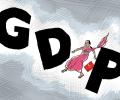
'There are some encouraging signs.' 'Notice that we have not said 7%-plus, we are keeping it at 6% to 6.5%.'

Facebook-owned messaging service WhatsApp has secured regulatory approval for launching its digital payment platform -- WhatApp Pay -- in a phased manner, close to two years after the US-based company's pilot run.

The government has found about 900,000 beneficiaries of its flagship job formalisation scheme, the PMRPY, were ineligible in the first place as they were part of the formal economy even before the inception of the scheme. The EPFO has also recovered Rs 222 crore so far from the employers concerned.

'The banks cannot pass on the hike in premiums to its customers, according to the norms. The premium won't go up substantially in any case and may be hiked to 12-13 paise (per deposit of Rs 100 a year),' Finance Secretary Rajiv Kumar said.
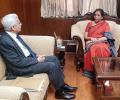
This demand comes at a time when the government is falling short of its revenue targets due to dwindling tax and low disinvestment receipts. It could account for the dividend in the upcoming Union Budget on February 1. RBI is, however, yet to take a final call on the government's demand and might decide on this at its central board meeting scheduled for February 15 in New Delhi.

The bulk of states' revenue comes from the devolution from the Centre's divisible tax pool, GST, VAT on petroleum, and excise duty on alcohol.

DDT is levied on dividends that a company pays its shareholders out of its profits. It is currently charged at the rate of 20.55 per cent, including a surcharge and education cess. Government may instead tax the shareholders receiving dividends, in a bid to help improve investor sentiment by addressing the multiplicity of taxes and bring down the effective tax rates for companies.

A robust dispute settlement system would help the government unlock tax revenues, and also aid ease of doing business.

The banking regulator is seeking an early exit mechanism for private banks under Prompt Corrective Action.

The instruction is that audit of large units be completed within seven working days, of medium units in five working days and of small ones in three.

In fact, India's investment activity growth is also estimated to touch a 17-year low in FY20. With overall demand not showing signs of revival, investment activity may take longer to recover, economists said.

C P Chandrasekhar, who has served on key statistical panels in the past both as a chairman and member, said he was present in the campus when the ruckus broke out on Sunday and found the incident "disturbing" and "unprecedented", and that it further undermined the faith in the system. Somesh Jha reports.

The department notified ITR 1-Sahaj and ITR 4-Sugam in January against the usual practice of notifying returns in April, with disclosure requirements related to cash deposits, spending on foreign travel, and electricity. The notification of the returns followed Budget announcements making income-tax return filing mandatory for certain persons even if their income was below the taxable limit.

The net NPA ratio declined to 3.7 per cent in September 2019 from just below 4 per cent in March 2019, reflecting increased provisioning.

This, said Sitharaman, would remove the possibility of unauthorised communication "and consequent harassment", which was a cause of concern for bankers.
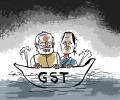
Bihar Deputy Chief Minister Sushil Kumar Modi said, a hike in GST rates would have hampered consumption amid the economic slowdown. The revenue augmentation panel in the Council meeting recently recommended revisiting and restructuring the GST rate slabs, besides correcting the inverted duty structure. The panel listed 24 items, including mobile phones, footwear, fabrics, LED light, medical equipment, utensils, agri machinery, pharma, and renewable components, which have an inverted duty structure, resulting in refunds of close to Rs 20,000 crore annually.

The new restriction will be challenging for businesses, as they will have to do regular follow-ups with their suppliers.

Proposals from the Centre's side include raising the 5 per cent slab to anywhere between 6 and 8 per cent, and doing away with the 12 per cent slab. A few states may oppose such a move because it involves hiking tax on items consumed by the poor. They have instead proposed raising the 18 per cent slab.
To improve compliance, govt may introduce lottery reward for filing GST. The Consumer Welfare Fund, where anti-profiteering proceeds are deposited, will be used to reward the lucky winners on monthly and annual bases. The prize money, yet to be fixed, may run into several lakhs of rupees for the annual draw, and about Rs 50,000 for monthly draws.
'The corporate tax cuts will obviously result in lower tax payments by companies,' says Central Board of Direct Taxes member Akhilesh Ranjan who retires after 37 years in government service.
 © 2026 Rediff.com - Advertise with us - Disclaimer - Privacy Policy - Sitemap - Feedback - About us - Terms of use - Grievances